




RadarSimPy v15.2.0 Release
We’re excited to announce the latest release of RadarSimPy, our high-fidelity radar simulation framework. This update brings new features, performance improvements, and bug fixes to enhance your radar development workflow.
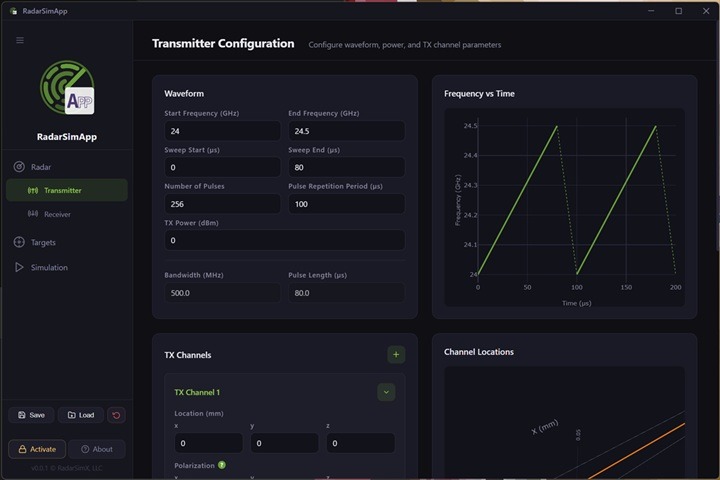
RadarSimApp is a new desktop application that brings advanced radar simulation to everyone—no coding required. Built on the proven RadarSimLib engine, it lets you design, simulate, and visualize radar systems through an intuitive graphical interface. Whether you’re a researcher, engineer, or student, you can model transmitters, receivers, and targets, run high-fidelity simulations, and analyze results interactively. Existing RadarSimPy licenses unlock full capabilities, while the free version remains fully usable for learning and evaluation. Currently available for Windows.
Here’s a summary of the latest version of RadarSimM, the MATLAB-compatible radar simulation module, now enhanced with new features, performance improvements, and expanded functionality.
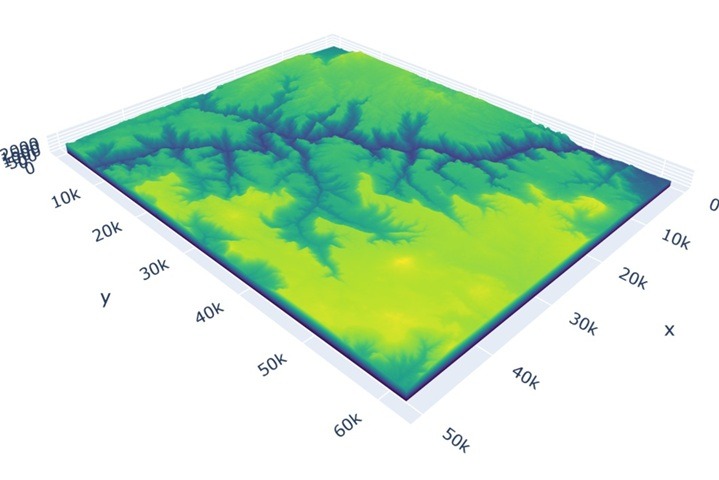
This notebook demonstrates pulse radar altimeter simulation for measuring altitude above terrain using RadarSimPy. The example configures a 10 GHz X-band altimeter positioned at 4000m altitude with a downward-pointing antenna that creates a ~140m terrain footprint. Using a detailed Grand Canyon 3D surface model, the simulation generates realistic ground returns and applies matched filtering to achieve 30 dB processing gain and 50m altitude resolution. This technique is essential for aviation altitude measurement, spacecraft landing systems, terrain-following radar, and autonomous vehicle navigation, providing direct height measurements independent of barometric pressure or atmospheric conditions.
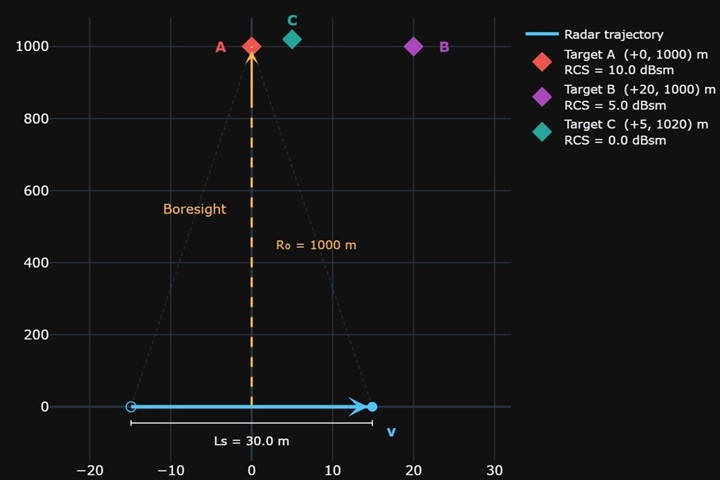
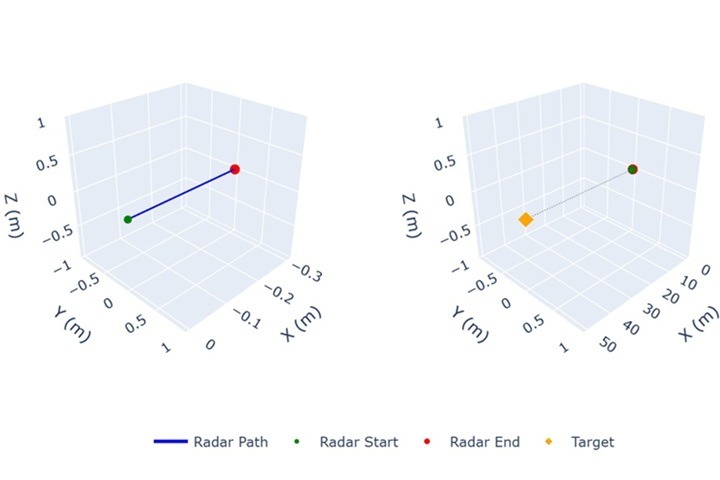
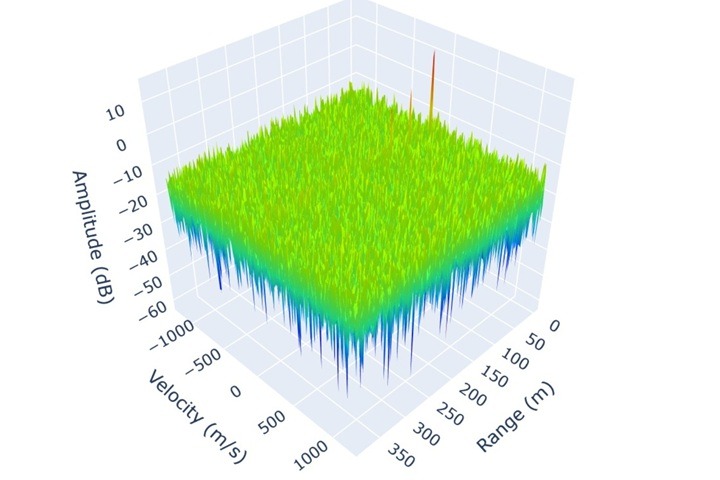
This post demonstrates radar platform motion planning using RadarSimPy, showing how to simulate FMCW radar systems mounted on moving platforms (vehicles, drones, robots). You’ll learn to define arbitrary time-varying radar trajectories, understand how platform motion creates Doppler shifts on stationary targets, and analyze Range-Doppler maps for moving radar scenarios. The examples cover linear motion, complex paths, and the critical distinction between radar motion and target motion in relative velocity measurements.
This post continues our discussion on FMCW radar link budget analysis, moving from a point target to a mesh target scenario. A mesh target introduces unique reflective characteristics that affect signal strength and detection range. Radar link budget analysis evaluates power levels from transmission to reception, accounting for antenna gains, propagation losses, and target properties. Understanding these factors is crucial to ensure the radar system can detect and track targets effectively, especially when dealing with complex reflectors like mesh structures.
Radar link budget analysis is a critical process for determining the power levels throughout the radar system’s signal chain, from transmission, through propagation, to reception. The goal is to ensure that the radar can detect and track targets at the desired range. The analysis involves understanding how transmitted power is affected by various factors, such as antenna gains, propagation losses, and target characteristics, ultimately determining if the received signal is strong enough for detection.
Pulsed radar transmits short, intense radio pulses to detect and track objects by measuring the time it takes for echoes to return. It’s used in air traffic control, weather monitoring, military surveillance, and navigation. The illustration demonstrates a pulsed radar simulation using the RadarSimPy framework.
In this example, we demonstrate how the RadarSimPy framework can be applied to derive the Cross-Polarization and Co-Polarization RCS of a corner reflector.
Consider utilizing RadarSimPy for a simulation example involving interferometric radar. This simulation employs RadarSimPy to capture subtle movements of an ideal point target, showcasing the radar’s measurement capabilities.